Saturday, January 12, 2013

Seven Psychopaths

This is Madness

With Seven Psychopaths, writer-director Martin McDonagh proved to be no flash in the pan with his well received In Bruges, reuniting with lead actor Colin Farrell in movie that the trailer didn't manage to show off its brilliance. This is something that deserves to be watched, pronto, with fantastic stories to tell of its characters, and has drama, comedy and action all rolled into one, presented in a manner that perhaps even Tarantino would be hard pressed to follow.

It's extremely self-referential and self-deprecating at times even, with McDonagh as the writer breathing life into one of three leading protagonists in Colin Farrell's Marty, a screenwriter facing a writer's block in trying to flesh out his latest idea revolving around seven psychopaths. Keen to help is best pal Billy (Sam Rockwell), an bit actor who's finding it more lucrative to be in the dog-kidnapping business together with their associate Hans (Christopher Walken), and provides Marty with directions and ideas to who the other titular psychopaths could be in his screenplay.

Which allows McDonagh to run riot with the various fantastical elements involving gun-slinging, battles, revenge, religion, and just about every noir and exploitation elements that he can think of. These little episodes of flash backs, or references, proved to be hits in taking the audience out of the present, and embracing these episodes as exaggerated tales spun out of real world references in the lives of the story-teller, protagonists or antagonists. There's a Jack of Hearts serial Killer with a penchant of leaving behind his calling card, inspired by real world incidents, an Amish parish out for vengeance on the killer who did the unthinkable to his daughter, a violent Bonnie and Clyde styled tag-team, and a Viet Cong out to seek revenge in the soil of the US, involving explosives, a hooker, and some crazy communication jokes.

All these centered around Billy dog-kidnapping Bonny, a shih tzu belonging to chief mobster Charlie (Woody Harrelson), and here's where all hell breaks loose. The violent nature of Charlie, usually involving shooting people without remorse so long as he can get his gun to work, trails the trio of Marty, Billy and Hans, inflicting personal damage as he gets closer to retrieving his dog. Here's where McDonagh's writing shines, in creating memorable characters put into memorable episodes with even more memorable dialogue to move the story forward. The conversations between characters are rapid fire, containing a wealth of information, anecdotes, and black comedy that will fly by extremely fast, making it well worth a second viewing.

What more, McDonagh ups the ante by making this extremely self-referential, almost coming close to parodying itself toward the closing stages, primed with graphic star-gazing into what could have been a ridiculously hilarious gun-blazing finale that has to be seen to be believed. Colin Farrell clearly got outshone by his co-stars, probably also because their characters were more flamboyant compared to his relatively muted one. Sam Rockwell is fast becoming a character actor to sit up and take note of if you hadn't already, tackling what would be a multi-faceted role as Billy, playing off the charisma of Christopher Walken really well, with the latter's character adding some soul to the film, with more than one gripping scene in the movie when he stood up against those out to get him.

What you can infer from the trailers and promotional material hardly scratched the surface of McDonagh's wonderful and brilliantly played out film, with its self-deprecating undertones and veiled criticisms, complete with sharp and snappy lines delivered by characters that you'd surprisingly care about, no matter how small their role are. Even McDonagh's own acknowledgement of his inability to craft strong female characters got a comical mention as well. A definite early shoo-in as one of the highlights of the year thus far with its great concept, so whatever you do, don't miss this!

Deadfall

Stay Alive

Perhaps it is expected nowadays to shoot a car accident in two ways - having a slam-bang action sequence when you least expect it to, and placing the camera within the cabin of the car to show how chaotic impact can be, especially when making the car roll multiple times in the aftermath of impact. The film starts off with an accident early, with brother-sister team of Addison (Eric Bana) and Liza (Olivia Wilde) having to break off in a wintry environment to journey north toward the Canadian border, in order to escape with their new found loot, robbed from a nearby casino.

Director Stefan Ruzowitzky's movie puts Bana in a negative role as a robber who has no qualms in violently dispatching anyone who stands in his way and freedom. With each encounter, we see both his compassionate side when having to deal with defenseless women and children, and his explosive nature when up against those whom he deem as a threat, expertly and clinically finishing off anyone, whether those from the law or otherwise, as long as one has something of value that can aid in his escape.

But Zach Dean's story goes beyond that one man Rambo action, with another plot running in parallel with ex-boxer Jay (Charlie Hunnam), released from prison and on the run after his visit to an ex-manager ended up in a fisticuffs and a comatose. Invited by his mom June (Sissy Spacek) to return home for Thanksgiving, Jay runs into Liza and a romance between strangers develop faster than you can say Cliche, with Liza seemingly having the upper hand in manipulating June to having do things to her advantage, though it's not before long that real emotions get into play, as she tries to put some distance between him, herself, and their inevitable destination that would bring them face to face with Addison.

Although there are elements in this storyline involving well used cliches, when put together effectively they become a taut thriller filled with a genuine sense of danger, especially when the stage is set knowing the violent and unpredictable nature of Addison, and the equally hot-tempered Jay. Zach Dean's story also goes one up from the average conventional story with having a strong father-child issues become the spotlight amongst multiple characters here, such as the policewoman Hanna (Kate Mara) and her constant struggle for acceptance from her police chief father Becker (Treat Williams), and the estranged relationship between Chet (Kris Kristofferson) and Jay. And as if family matters cannot get more complicated, suggestions of incest also gets dangled around between Addison and Liza, hinted ever so slightly, but no less making an impact about how twisted the two characters can be, if not for the transformation in Liza when getting romantically involved with another.

Action sequences were brilliantly shot, especially those snow white chases using snow mobiles. It's clear from the start that the violence will be graphic, without consciously needing to censor itself, so plenty of graphic moments got shown without a flinch. One of the most tense sequences involved all the characters converging around a dinner table, in what would almost be like Michael Haneke's Funny Games, with the one holding the gun calling the shots, and having that sense of superiority to impose his will upon those unfortunately caught in his web. That scene along is priceless, and makes up more than a reason to watch this on the big screen. Recommended!

Friday, January 11, 2013

Matru Ki Bijlee Ka Mandola

Bringing All The Boys to the Yard

I'm sure many would have been enticed by Anushka Sharma's cheeky and sensual scene seen in the trailer where she emerged from under a mean looking pond in a wet t-shirt, coming to expect a mad cap rom-com, before the opening scene involving a white stretched limo in an open agricultural field brought all illusions crashing. This is written and directed by the man who brought us Kaminey and 7 Khoon Maaf, films that are unorthodox in Bollywood terms, and continues in his daring, swashbuckling style with Matru Ki Bijlee Ka Mandola.

The title is a play on the names of its three main characters, which pans out and are directly involved in the plight of the villagers in Haryana. Vishal Bhardwaj's story gets pumped with enough twists and turns, centered around the great divide between the haves and the have nots, together with how the crave for money and power corrupts from within. In Mandola, played by Pankaj Kapur, he's a Jekyll and Hyde character, the rich industrialist who fantasizes possessing the lands of the farmers to transform them into a special economic zone done concrete jungle style, with dough rolling in for his urban development company. But when drunk, he goes to the other end of the spectrum, lending his support to the unhappy villagers in leading a revolt against himself.

Caught in the middle is the full-bearded Imran Khan's Matru, whose servitude toward the Mandola household means he's put in a position to try and influence Mandola when he's in either mode, or perhaps swaying him into a position which is most advantageous for the villagers, whom he supports, coming up with schemes and ideas to thwart the many opposing plots to get the farmers lose their land, or get into debt, leaving them with the only choice of having to sell their land, and livelihood. And rounding up the equation is Mandola's feisty daughter Bijlee (Anushka Sharma), a free spirited woman without a care in the world thanks to being born with a silver spoon, but ultimately having to decide and play out a childish romance with Badal (Arya Babbar), her college sweetheart.

The protagonist comes conveniently as Badal's power hungry mother, the politician Chaudhari Devi (Shabana Azmi), who together with her son and Mandola, form a symbiotic power hungry relationship, one needing the other for money, and the other for power, and the way to get both is via the impending union of their children Badal and Bijlee. They form the perfect villanous bedfellows in trying to get rid of the villagers in their midst in order to stand for their brand of progress, and are undoubtedly a pot-shot taken by Vishal Bhardwaj to paint a political picture through this film, what more with the villagers picking up inspiration tips from an unknown guru calling himself Mao, and Matru having very left political leanings in his dealings to help the poor.

But unlike Pipli Live, this tale somehow fell on its own weight and ambition. The politics weaved felt very lightweight in criticism, painting very broad caricatures on how those with insatiable power would behave, and the heroism of those who go beyond their call of duty to lend assistance. It's a class, social, and power divide struggle, painted as a background to a romantic triangle which was relatively non-existent especially in the Badal-Bijlee arc, with Matru-Bijlee looking solid right from the start. Then again, perhaps the first time pairing of Imran Khan and Anushka Sharma was anticipation enough, both one of the hottest properties in Bollywood currently, but both equally daring in taking up a project that boasts a highly non-conventional narrative treatment.

The twists and turns in affiliations go into epic proportions, but Bhardwaj got let down by a relatively weak final act, that didn't manage to capitalize on the uniqueness of his presentation and storytelling craft, degenerating into crowd pleasing silliness in an all's well end's well attitude. It's episodic in fashion, with facing of the film kept erratic, which served its purpose in providing time to contemplate and absorb the multiple turns, and riding on adrenaline in its quirkier moments mostly involving a pink buffalo, but sometimes having too much of a good thing repeated may backfire and make it creep into the boring, one-note territory.

Vishal Bhardwaj would cement himself as a very different kind of director in Bollywood, but certainly Matru Ki Bijlee Ka Mandola isn't his strongest work to date, but I would guess the sheer presence of leads Imran Khan and Anushka Sharma would ensure a decent return.

Thursday, January 10, 2013

Gangster Squad

They Are The Law

Director Ruben Fleischer's Zombieland was a riot, with plenty of fun in its fantasy premise of a group left fending for its survival against a zombie apocalypse, but gets all serious here with his treatment of Gangster Squad, set in the 40s post WWII Los Angeles where its riddled with crime and corruption, with gangsters owning every turf and calling the shots in the running of the city. A few good men get rounded up by a common ideal to take back their city, starting with getting rid of head gangster Mickey Cohen (Sean Penn).

By the time this film runs into its 30 minute mark, you'd see all the shades of Brian De Palma's Untouchables, where instead of Capone, we have Cohen, who got introduced to audiences in a more sadistic fashion, making De Niro's scene with the baseball bat look like a stroll in the park, setting the violent tone that's to pepper the film at every opportunity. And given today's standards, who would blame Fleischer in making this ultra-bloody, especially when it boils down to fisticuffs and the bloodying of any pummeling to the face, and expending plenty of lead through vintage machine guns, which pushed back the film's release after the infamous Aurora, Colorado massacre which required scenes to be reshot.

Then we have Josh Brolin as Sgt John O'Mara, given the green light by weary police chief Parker (Nick Nolte) to go under the radar and assemble a crack team of his own to use any means possible to wrest control from Cohen, and cripple the gangster's operations, with a Mission: Impossible styled disavowing hanging over their heads should any of them be caught. If this doesn't sound like Elliot Ness gathering his troops, I don't know what is. Dogged by an inherent sense of righteousness and honour, O'Mara assembles the titular crack squad consisting of marksman Max Kennard (Robert Patrick hidden behind thick makeup), his unofficial understudy tag-along Navidad Ramirez (Michael Pena), intelligence Conway Keeler (Giovanni Ribisi), Coleman Harris (Anthony Mackie) with throwing knife skills that got severely underused, and then the Romeo of the lot Sgt Jerry Wooters, whose romance with Cohen's moll Grace Faraday (Emma Stone, literally a flower vase role) brought about an edge to the team.

And just like the Untouchables, with its stylish art direction and production values to recreate the aura and romanticism of its early American era, the drama unfortunately centers around a handful of its leads, without giving much of the other supporting characters screen time to get to know them beyond their single-ability that brought them to the fight. And even then we don't get beyond O'Mara's sense of duty, Wooters' rather maverick ways and romance with Grace that didn't threaten the dynamics of the group nor put him very dangerously close to Cohen's gun-sights. This film could have been a lot more with deeper character study since we have five very different kinds of cops each with their own personal agenda brought to the table, but we get none. This instead got traded for its stunning visuals, a combination of slow-motion, stylized action sequences ranging from montages of raids the Gangster Squad undertakes to close Cohen's various operations, to personal one on one fisticuffs, since Cohen is after all, a mobster who got to where he is through sheer professional boxing prowess and experience. Camera-work, CGed or otherwise, also made quite an impact with its fluid motions to capture the crux of any situation.

There's little to wow on the narrative side of things, since plot development moved in very expected fashion. Probably the sole interesting peak would be how O'Mara's wife Connie (Mireille Enos) got involved in handpicking the Gangster Squad, which boiled down to a pragmatic, selfish and very valid real life reason of keeping her husband alive in a job known to attract Trouble, and surrounding him with people blessed with the necessary skillset to get their mission accomplished.

Saturday, January 05, 2013

Killing Them Softly

It's Noisy

The characters who needed to die in this film were not killed softly. In fact writer-director Andrew Dominik shot those scenes in the noisiest way possible, employing graphic visuals and realistically echoing all shots ringing out as if you were at the side of a gun going off at point blank range, putting strain on every speaker in the cinema hall. But when the dust clears an settles, Killing Them Softly is found to be a little wanting, although a reprieve is found in not being anywhere close to the meditative behemoth of his earlier film starring Brad Pitt as Jesse James.

Adopting from a 1970s novel written by George V. Higgins entitled Cogan's Trade, Killing Them Softly got updated for today's audiences, putting us in the current US Administration and the various cliffs it had to maneuver itself out of. The corruption of capitalism and social tirade made by Pitt's hitman character Jackie Cogan probably summarizes in no less succinct terms, all the criticisms leveled at the system, though pales if in comparison to how Edward Norton's Monty Brogan iconic monologue in front of a restroom mirror in Spike Lee's 25th Hour. It shed some hard truths, being politically incorrect and never mincing its words, which made Jackie's one liners seem all the more hollow.

From the get go, you'd come to expect a pretty unconventional film, with a fairly irritating and jarring opening credit sequence that prepares you to enter a seedy world where an illegal gambling joint, run by Markie (Ray Liotta) is about to get hit. It muddles about for a little while as primary schemer Johnny (Vincent Curatola) enlists the help of Frankie (Scoot McNairy) and reluctantly, his junkie buddy Russell (Ben Mendelsohn) to pull off a job that has opportunity written all over it, no thanks to Markie having to commit an insider job once, and getting away with the heist even when exposed that he was the mastermind.

Richard Jenkins' middle-man Driver character for the mob enters the picture, and engages the services of Jackie to go put things right, where those responsible would have to get pumped with lead. And as with most heist jobs committed by those who cannot keep their mouths shut and their trail clean, it's sooner or later they get found out and tracked, leading all the way back to the top of the food chain. So you'd know how the rest of the film went from a trailer that revealed a little bit too much.

Brad Pitt continues in roles that allows him to be ugly characters both internally and externally, having makeup and costuming disguise his good looks in order to blend and try and pull off a negative role fairly convincingly. In fact there isn't any likeable character in the movie, where justice prevails in a way, even if it's mob justice. Almost single-handedly carrying the film as the rest of the actors are relative unknowns, the film picked up with his character's introduction, and accompanying graphic violence that perhaps was unnecessary, if not to want to shock the unsuspecting audience into awe at its matter-of-fact-ness.

Good production values, brilliant art direction and fine cinematography continue to be hallmarks of Andrew Dominik's film, but here you'd feel short changed at its abrupt ending that didn't go anywhere. It did its job in bringing current proceedings to a close, yet opening another door that left it hanging like an unfinished job. Perhaps it's for artistic reasons to leave an open ending and reminding everyone of the corrupt nature of a business transaction, but this is blatantly hiding its short-coming in shying away from the conventional studio end, and in doing so brought about a certain pretentiousness, and lack of courage maybe, to know how to call it quits properly.

Friday, January 04, 2013

The Master

One Universal Truth

Nothing sells a film more than controversy, and The Master had no lack of one, with its parallels drawn toward Scientology with its premise where a cult like leader is in the early stages of establishing his religion based on scientific fantasy of sorts, and the methods used that calls for true faith amongst his believers. Paul Thomas Anderson crafts a film that takes a while to get used to given its thematic focus on the none too pleasant, ranging from violence to the hallucinatory, and it is only the acting prowess of the trio of Philip Seymour Hoffman, Joachim Phoenix and Amy Adams that made this tolerable for what it wanted to convey.

Phoenix plays Freddie Quell, a soldier back from the Second World War who's finding it hard to adjust back to society, given his violent tendencies and is usually in a floating world of his own, fueled by his own deadly mix and concoction of any liquids he can find to develop into bootleg alcohol. In his drunken stupor one day he stumbles upon the boat full of followers of The Cause, and as a stowaway gets to meet the charismatic Cause leader Lancaster Dodd (Hoffman), who decides to take him under his wing, with Freddie's ability to conjure up some of his magic juice a plus to have around the community.

Call it trying to recruit a follower, or finding a friend with whom you can click instantly with, the two begins a topsy turvy relationship built upon mutual trust, and Freddie's occasional bouts of violence toward anyone who challenges Lancaster's authority over his sermons. It's an extreme form of bromance that doesn't sit well with Lancaster's pregnant wife Peggy (Amy Adams), who deem Freddie as an unforeseen destructive force that threatens to derail the good work they have put in developing their brand of teaching and legion of followers. And unknowing to all, Freddie is also that corrupting force tht reveals the hypocrisy amongst the Dodd family, with the recently married Elizabeth (Ambyr Childers), daughter of Lancaster, also finding seductively irresistable.

Paul Thomas Anderson's film reportedly had issues with members of Scientology for a crucial scene and line uttered in the film, and undoubtedly the parallels here, such as the beginnings and philosophy shared by its charismatic leader, Processing versus Auditing, would generate interest to come watch the film. The offense also extended toward suggestions that the rich, having enough to put them on top of Maslow's hierarchy of needs, seem to want to fulfill something empty inside them, and therefore more susceptible to swindlers and cons who offer that doorway to spiritual nirvana. The narrative involves embarking on an eyewitness journey together with Freddie when he got taken under the wings of the Dodd family and their extended supporters, from ship to land, to the abodes of its rich backers.

What made this film compelling to watch despite its scenes that seem to linger in indulgence, and requiring patience to sit through scores of repetition, are the powerhouse performances, and that's it. It deals with the symbiotic relationship between an alcoholic man suffering from post war trauma and that of a cult leader and his influence and power, which in a way threatens the make up of the Dodd family. It talks about the power of cult and the cult leader, which Philip Seymour Hoffman aces with his sheer gravitas and presence on screen, delivering countless of seductive points even though they sound warped to begin with, and provided a clear contrast when his Lancaster is in private and public. While Freddie may be the more explosive one, Lancaster holds his own hair-drying effect when the need calls for it, with a short fuse threatening to blow each time his authority comes under fire in which he has no proper answer for. These are scenes that allowed Hoffman to fly off the handle, in between keeping his composure especially when needing the tranquility to sell his ideas across.

Freddie becomes the third party between Lancaster and Peggy, the latter who sees her power behind her man waned and undermined, when she experiences being threatened by Freddie's introduction. I actually found this dynamics between Joachim Phoenix and Amy Adams and their characters a lot more interesting in their power struggle. Phoenix seemed to be sleepwalking through his role as the perpetually stoned army discharge, and seem to light up each time he gets to pulverize someone, in between being used as a guinea pig for Lancaster's experiments and teachings. His character's journey is the one the audience undertakes, and being an unpleasant character, makes the journey a little bit unsettling. Amy Adams, while limited in scenes, epitomizes what it means when being under a perceived threat, with one of her best scenes involved engaging the two men one after another for separate purposes.

Production values are high, with effort taken to make this really like the 50s, although like Les Miserables it had its fair share of facial close ups of the actors. The score seemed really muted though, with nothing memorably standing out. The Master is a film that one would either love, or really dislike, because one may have expectations going to this, but the ending will really deflate all those high expectations of something more grandeur. The story is pretty straightforward, often times seemingly being stuck and unable to move along, and we're taken on that same ride and put on the same boat, experiencing and feeling the same level of frustration the protagonist feels. Ultimately it's a plain sailing affair, with only its good performances to thank and shore up what's lacking in strength of story.

Tuesday, January 01, 2013

2013 Singapore Movies

Friends, this is to keep track of Singapore movies (made by Singapore Filmmakers / selected co-productions) screened, or going to be screened, for this year - 2013.

Do check back for periodic updates, as and when I discover them.
Or help me! If you know of those not in my list, please let me know?
Or if you're a filmmaker and have an upcoming project, would you grant me the opportunity of trying to add a little buzz to it?

Mucho Gracias!

Feature Films


Ah Boys to Men / 新兵正传 Part 2 - Jack Neo, Jan 2013
Click here to read my review.

Trailer:

Time No Enough / 時間不夠用 - J.P. Tan, Gala Premiere Only, Jan 2013

Trailer:

Love... And Other Bad Habits - Lee Thean-Jeen, Feb 2013
Click here to read my review.

Trailer:

Red Numbers / 红字 - Dom Ow, Feb 2013
Click here to read my review.

Trailer:

Trailer (Gao Family):

Inside the Urn / Ghost Child / 鬼仔 - Gilbert Chan, Mar 2013
Click here to read my review.

Trailer:

Sex.Violence.FamilyValues - Ken Kwek, Mar 2013 (R21, Objectionable Bits Muted)
Click here to read my review.

Trailer:

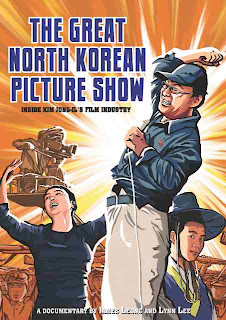
The Great North Korean Picture Show - Lynn Lee & James Leong, Dubai International Film Festival, Dec 2012, Southeast Asian Film Festival, Mar 2013
Click here to read my review.

Liberta - Kan Lume, Cinema Digital Seoul, Special Mention, Aug 2012, Southeast Asian Film Festival, Mar 2013
Click here to read my review.

Trailer:

FRVL - Tzang Merwyn Tong, Southeast Asian Film Festival, Apr 2013 (First Look)

Judgement Day / 世界末日 - Ong Kuo Sin, Apr 2013
Click here to read my review.

Teaser 1:

Teaser 2:

Trailer 3:

Ilo Ilo - Anthony Chen, Cannes Directors' Fortnight World Premiere May 2013
Click here to read my review.

Trailer:

That Girl In Pinafore (A Singapore Love Story) - 我的朋友,我的同學,我愛過的一切 - Chai Yee Wei, Aug 2013

Teaser 1:

Teaser 2:

Teaser 3:

Menstrual Man - Amit Virmani, Aug 2013

Trailer:

Innocents - Wong Chen-Hsi, Sep 2013
Click here to read my review.

Trailer:

Justice Devil / The Magnum (Working Title) - C.J.Harvaraj, (Pending) Oct 2013, Unreleased

Trailer:

(Magnum) Trailer:

Here We Are - Singapore Music Film Documentary - Daniel Rucerito, Oct 2013 (Released on YouTube)

Pendekar Bapak-Budak (Childish-Dad Warrior) - Raffi Khan, Nov 2013

3 Peas in a Pod / 他她他 - Michelle Chong, Nov 2013

Trailer:

Everybody's Business 人人有份 - Lee Thean-jeen, Dec 2013

Trailer:

To Singapore, with Love / 星国恋 - Tan Pin Pin, Busan International Film Festival Oct 2013

I Hugged The Berlin Patient - Edgar Tang, Dzul Sungit, Dec 2013

Trailer:

Monday, December 31, 2012

Top 5 Duds of 2012

Ah, the dishonour roll. Half of the worst lot happen to be local fare, and one of them had the distinction of possessing the audacity to pass itself off as a film. Needless to say that there's a fair bit of the horror genre here, because filmmakers may have thought it was easy to make one, but the truth, and results, show that they're grossly mistaken. And here they are:

Trespass
Nicolas Cage and Nicole Kidman. Sounds like a winner, not. Both were one time, bankable stars where their names alone on the marquee guarantees a box office success, but in recent years they have both fallen from grace given dodgier projects. Putting two wrongs together don't make one right, and Joel Schumacher chalks up yet another dud that was narratively lazy.

Joker
Akshay Kumar and Sonakshi Sinha paired together in Rowdy Rathore was a riot, but together in Joker they'd leave you scratching your head whether they had really read the script carefully before signing on the dotted line. It's science fiction, it's fantasy, and the genres you can just about do anything and get away with it, but here, imagination had run wild in the opposite direction, delivering something catered more for children under the age of 2, where they can't understand anything. It's no wonder, and an obvious warning sign, when both stars decided to ditch their promotional obligations for the film.

The Apparition
If the filmmakers were lazy, you'd get movies like this one. Poor story leading to poor characterization leading to insipid directing, and desperate editing to try and make it look good. It's a horror film gone horribly wrong, and that in itself is the true horror brought about by the movie.

Timeless Love
I'm not even sure why the need for two directors here, other than to have the more recognizable name help in its marketing efforts. One of the lead actors did quite the unprofessional job of badmouthing the film quite publicly, and if you sit through this film you'd soon know why. In an effort to cash in on a trend of youth films, or films that reminisce days of youth, Timeless Love wasn't actually timeless, but showed how films like these should be buried in time. It's a victim of trying too hard, and came off as artificial, hokey, and one extremely long commercial for a watch. No prizes though for observing who sponsored the movie.

- Hsien of the Dead
- My Ghost Partner
These two tied for the worst of the year. There's no story, there's no acting, and Hsien of the Dead looked more like an ulterior agenda gone wrong for somene wanting to put "filmmaker" into one's CV. It's a pity that nobody's quite giving Huang Yiliang the backing and training he needs to become a better filmmaker, as his My Ghost Partner had to hobble funds from so many parties, it could win an award for having the longest end credits of thanks and acknowledgements to its investors, hoping that they won't knock on his door soon to ask for their money back. And for Hsien of the Dead, it's a primary school kid's film project gone horribly wrong, that nothing more should be said about it other than to condemn it to the depths of the hell hole imagination it came from. Singapore's first zombie film credit is now snatched away by an undeserving project - I won't even label it a movie now, to do so is to insult the medium and art form.

Top 10 of 2012

The customary Top 10 list of my favourite films of the year, and it's no easy task to pluck the crème de la crème from a pool of 272 theatrical and festival releases watched this year. So here's about 10% of the best, split between the honorary 10 which is more of a mixed bag this time round, and the meritorious 20 that had a crack at the top. A pity that no local film released this year managed to get into either list. In order, my Top 10:

10. Barfi!
One of the pitfalls of an up and coming actor is to accept just about any role that comes his way, and in doing so blotches his filmography with mediocre works that either demoralizes, or burns him out. There's no fair share of such stories from Bollywood, which is what makes Ranbir Kapoor an exciting watch amongst his competitive peers, as he picks and chooses his projects carefully, with each role challenging him from those he had tackled previously. As central character Barfi, he puts aside his speech, and goes into full acting with everything available in his arsenal, to become one of the most memorable characters he had tackled to date. Priyanka Chopra also stepped out of her comfort zone, deglamourizes herself, and together, they form an acting tour-de-force which is what's great about this Indian submission to next year's Oscars.

9. Jiro Dreams of Sushi
It's about that quintessential Japanese cuisine, and more. While you can feast your eyes on the gloriously captured sushis, and imagine just how heavenly the tastes can be, this movie goes beyond the usual documentary showcase of the man, his restaurant and the food he serves. It's about the lifestyle and philosophy behind it, that gave the movie its soul, of the hard work that beckons success, of perseverance and humility.

8. Headhunters / Hodejegerne
I really enjoyed the genre shifts in the film, that made Headhunters such a delight, and pleasure to watch. It may go off in one track, before spinning onto another, and just when you thought it would wrap, in comes another surprise from the blind side. The Nordic countries are slowly but surely showing the world how to make suspense thrillers, and this one ranks up there as filmmaking to be emulated.

7. Seeking a Friend for the End of the World
There's no fair share of disaster and end of the world type movies to capitalize on the year 2012 prophesied by some to be The End, but in this film comes a quirky, yet touching tale, about two souls connecting as they journey to help each other fulfill their unfinished business before the big one hits. The banter, the light comedy, and the utterly moving final act, is what makes this film an instant classic. The minute The Hollies' The Air That I Breathe come on, the floodgates will open, trust me. I'm beginning to appreciate Steve Carell's dramatic roles more than his comedic ones, and this is yet another fine example why this is so.

6. Love in the Buff / 春嬌與志明
Some may find it curious I choose to rate this higher than the other Edmund Pang release Vulgaria / 低俗喜劇, but I guess it's about a continuation and a sequel done right. We've grown to love the Jimmy and Cherie, the characters the filmmaker had created in the first film, and we get to hang out with them a lot more this time even if they spend a lot of time apart. It's about that absence that makes the heart grow fonder, and this follow up film is just proof of that mantra. Who knows, with luck, this could be the Asian answer to Richard Linklater's Before Sunrise/Before Sunset series.

5. Wreck-It Ralph
Disney has probably found the successor to the Toy Story series, by taking a similar approach and formula but this time with bits, bytes and electrons. What if the computer game characters were to come to life on their own, in their world, when humans weren't around to play them, and voila, Wreck-It Ralph becomes that spiritual companion, with that sense of adventure, feel good message, and classic rivalry between leading characters who soon realize they got more in common than just bickering. This is a clear winner, and let's hope there'll be more of the same in the pipeline, to build on that universe already created.

4. The Raid: Redemption / Dredd
OK so I'm cheating a little bit here with 2 films in the same spot, but both are what I call spiritual companions to each other. One, a film about cops raiding a fortified building to get to a drug dealer, using everything in their arsenal and ultimately relying on their martial arts, while the other is about erm, cops raiding a fortified building to get to a drug dealer, pumping plenty of lead along the way. It's modern life in one, and science fiction in the other, but make no mistake, both are ultra-violent. Take your pick!

3. When Wolf Falls in Love with Sheep / 南方小羊牧场
The first "wolf" film in my list, this is a fine example of the type of whimsical, comedic and dramatic stories that's coming out of Taiwan in recent years, where young casts with idol looks promptly deliver the ups and downs of relationships, set in a uniquely Taiwanese modern day premise. Philosophical to a point too, if you bother to peer beneath the saccharine sweet veneer.

2. Wolf Children / おおかみこどもの雨と雪
The second wolf film is an animated one, under the direction of Mamoru Hosoda, the man who brought us fine movies like The Girl Who Leapt Through Time, and Summer Wars. I have to admit I wasn't too sure about this when it was announced, but was completely blown away by its heartwarming, emotional core, and wonderful animation, where even if you were to take away the science fictional elements, it still makes for a powerful family drama. Probably the only film in this list that had me on the verge of a tear.

1. Ruby Sparks
If there's a film that's original, imaginative, and of fantasy in 2012, then Ruby Sparks is it. It's funny, yet dwells upon the deep dark recesses of Man in his temptations to hurt, in how we're capable of developing something beautiful, yet equally culpable in destroying things on a whim. A dark comedy blended with an unlikely romance, this film takes the crown for being truly unique in a year where comic book heroes and their sequels continue to plough their way to the box office.

and the remaining 20 in alphabetical order:

Agneepath
Arbitrage
Argo
The Billionaire / วัยรุ่นพันล้าน
The Bullet Vanishes / 消失的子弹
The Cabin in the Woods
Chronicle
The Collector / 收烂数
End of Watch
English Vinglish
Grabbers
Kahaani
Life of Pi
Looper
Marley
The Perks of Being a Wallflower
Red Lights
Robo-G / ロボジー
Ted
Vulgaria / 低俗喜劇

[Online] The Painted Ladies

Shown at Sinema Old School in May, producer Brenda Er had made this documentary available online at vimeo so that those who had missed out, can have an avenue to view her film. After all, this was made with the intention to educate, reach out, and hopefully inspire women who had suffered some form of abuse, to stand up and speak out. And even more of a challenge, is to forgive those who had done them wrong.

And it's not easy, which Brenda herself had admitted in a Facebook post that she too had recently, near the time of release of the film, turned forgiver. Given the circumstances in timing, she had opted to become the fifth subject in the documentary, turning the spotlight instead on the four other women who had boldly come forward to make their stories, confessions, frustrations and hope, heard for anyone willing to give them their time of the day.

With the Painted Lady butterfly as a very apt motif, opening the film - aside from the bookending scenes involving endless roads on the expressway to perhaps signify the long, continuous journey called Life - with the metamorphosis of a caterpillar larva into a butterfly, obviously in line with the subject each of the interviewees will be sharing on their deep hurt, their personal life changing experiences, and the aftermath of taking affirmative action. The four women were deliberately selected from different ethnic groups to perhaps demonstrate that these issues can happen to just about anyone, and how one's response in doing what's right, may meet with challenges even from the closest of loved ones.

In some ways this documentary is similar to Women Who Love Women, or even Pink Paddlers, with female directors dealing with subjects focused on addressing women related issues, and using film as a medium for instruction, inspiration, or sharing. Having to listen to what the subjects had gone through, from sexual abuse when young, to abandonment, single parenthood and engaging in various vices in vicious circles, it's inspiring to listen to how they'd decide to take life by the horns, and turn theirs around for the better despite the odds that society has leveled on them.

Technically there isn't anything fancy in the delivery of this documentary, preferring the very perfunctory approach so as not to distract attention away from the content. It's static camera and talking heads styled interviews, with editing that weaves the narrative through each interviewee in round robin fashion to keep the discussion grouped into themes of Forgiveness, Love and Worthiness, rather than taking the easier way, and probably more boring fashion, of presenting each interviewee's story one after another.

For those interested, you can view the entire documentary, made available by Producer Brenda Er on Vimeo:


Related Links
- Facebook Page

Sunday, December 30, 2012

Taxi! Taxi! (德士当家 / De Shi Dang Jia)

Ah Boy, Don't Steal My Rice Bowl Leh!

The Internet plays a big role in Kelvin Sng's feature directorial debut, since it is the blogging platform that Dr Cai Mingjie initially took to write his daily experiences as a taxi driver in the form of a blog, having been laid off from his A-Star researcher job and failed in multiple job applications. Described as probably the most educated taxi driver in Singapore then, Taxi! Taxi! is loosely based on his published book, and having watched this, the film only adapts the premise of his professional career, and included some very slight anecdotes, before spinning something on its own, closer toward television melodrama.

We all have our own favourite taxi-driver stories and experiences, from memorable conversations with talkative drivers, to those who drive like Formula 1 racers. What Taxi! Taxi! did clearly to avoid, is to top those individual moments, and stories you'd hear from friends and family, attempting instead to weave some social commentary into the narrative, given that it's a local formula that works at the box office. But unfortunately for its bevy of writers, it stayed very politically correct, with deference to OB markers, that it suffered from the cut-and-thrust of engagement through film, and even its comedy stayed relatively safe. I guess it had the PG rating in mind, and somehow had its wings clipped.

Things like retrenchment and losing of jobs to foreigners, are hot topic subjects that could have benefited more than from its caricatures (speaking in accented English), with Caucasians singing praises about governance here, and the locals, epitomized by Gurmit Singh's Professor Chua, inspired from Dr. Cai's story, getting the short end of the stick for being sandwiched in between reality, and expectations from friends, family, and loved ones. Educational policies also came to the forefront thanks to the rather uncouth Ah Tau (Mark Lee) and son Jia Jia (Chua Jin Sen aka Dr Jia Jia) with their struggles to get the latter brushed up on his English language skills, together with Prof Chua's unique encouragement to have his own kid (Royston Ong) improve his scores in order to score (pardon the pun) a visit to his research lab.

The narrative was effective, yet predictable, as you'd know where the characters were headed for, and how things would develop. Despite its title, its taxi-ing moments were limited to Prof Chua learning the ropes from the experienced Ah Tau, complete with their initial differences and Ah Tau's run of bad luck, coupled with a few funny scenes especially between passengers and drivers. What this story chose to explore was instead two father-son relationships, where both Chua and Tau find it necessary for various reasons to tell white lies to their loved ones, the former because he's embarrassed, the latter to hide the truth of his wife's elopement from his young son. Between the two families, despite the extended relationships with Chua and wife (Jazreel Low) and mother-in-law (Lai Ming, too typecast for local screens already), this side of the story turned out to be quite the bore and rote, compared to the charm and chemistry between Ah Tau and Jia Jia, the former who is also going after his tenant Regina (Gan Mei Yan) to be his potential new wife.

Between the two comedians in Gurmit Singh and Mark Lee, who are sharing the same big screen after One Leg Kicking in 2001, Mark Lee was the more comfortable one in front of the camera, being the more seasoned feature film actor, playing for the umpteenth time the role of a good natured Ah Beng. It could probably be an interesting prospect had the comedians switched roles to play against type. But even these two veterans got upstaged by Dr Jiajia, the internet star, in his very natural and earnest Singlish rattle, coupled with his "Kee Chiew" catchphrase which will gain traction, and earn the little boy a lot more fans. He is an expected draw toward the film, and his role, specifically written for him, does not disappoint. I guess with a little honing and polishing, he could ace more roles, and probably join the ranks of the rare child actor in Singapore.

Product placement isn't as intrusive or blatant as other local films, given that taxi cabs and petrol kiosks are hotbeds for sponsors anyway. In-vehicle conversations are a thing of a norm in most films, but I suppose a smaller budget here made the filmmakers resort to CG-ed taxi rides, compared to having rig a cab with cameras and shooting as it went around, with actors conversing, driving and not missing their comedic cue and timing a bit of a tall order. It could have really hammed this portion up a bit more, keeping with its kitsch looking poster, rather than leaving these portions sorely exposed.

I still recall Kelvin Sng's short film Kichiro which had its climax set at a rooftop, and it's pretty much the same case here with rooftops bookending his debut feature. After having cut his teeth through a number of short and mid-length films such as The Gang and Fairytales, it's heartening to see confidence from studios in backing another local director making his leap into the feature. Sng's not resting on his laurels just yet, with another film primed for 2013, but for now, Taxi! Taxi! is that audience friendly mainstream movie that makes for a safe, entertaining calling card nonetheless.

Saturday, December 29, 2012

Arbitrage

Money, Power, Women

Nobody plays a rich man these days in Hollywood with more suave than Richard Gere, and Arbitrage plays like a one man Margin Call, where there's the corporate wheelings and dealings, whether legal, illegal, or covered up, with profits and sole survivorship the highest of priority, but having one man which Wall Street heralds as an oracle, call the shots, versus the interaction of the board and its employees in the J.C. Chandor film. It's a tale of dirty little secrets here, with ourselves as witnesses to how the rich has the resources to get things done their way, even wriggling against a closing tide to try and shake off a manslaughter charge.

Gere plays Robert Miller, the head of an investment company which has been the darling of Wall Street for its stellar track record, and is on the verge of concluding a merger from another film. Everything's fine and dandy for Robert, as we see he has the impending deal which will make everyone a lot of money, a lovely family with wife Ellen (Susan Sarandon), son Peter (Austin Lysy) and daughter Brooke (Brit Marling) who also serve as executives in his company, and pretty much living it up with all the trappings that money can buy. But we soon learn he's pretty much of a hypocrite in life with a different set of moral values as expected, parting company with his family soon to celebrate his birthday with his artist mistress Julie (Laetitia Casta), who is getting a tad too demanding on this tycoon's time.

And when bad things happen, they happen one after another in quick succesion. Soon Robert finds himself having to fend off various upsets in his life. When gallivanting with his mistress, he gets into a car accident, escaping with bruised ribs and a cut on his forehead, but for Julie to meet her demise. Investigations led by Detective Michael Bryer (Tim Roth) seem to suggest he's close to nailing Robert, if not for the rich man's bevy of connections with people whom he can count on, from legal counsel readily available, to those whom he can be certain be relied upon to bail him out and keep their mouths shut. The spectre of doom also extended to his creative accounting in hiding losses from a bad investment, and an audit team sniffing around prior to conclusion of his merger deal. Then there's Brooke poking her nose around questionable cooks which puts her in a spot whether to reveal her findings or otherwise, and Robert's matrimony being put on the line as well.

Written and directed by Nicholas Jarecki, Arbitrage seemed to suggest that when there's money, there's going to be a way. And face it, nobody climbs to the top without breaking some egos, stepping on toes, and being street smart about survival of the fittest. With more resources, one becomes an automatic target especially if need to be made an example of, and to nick the public officials recognition in bringing down the perennial fat cats of the industry, making it a coup of sorts in the legal fraternity. It has morality put on display as we see how various individuals subscribe to varying degrees of grey, where decisions get made on what reaps maximum benefit to oneself, whether to repay a debt, or to put up with shenanigans just because.

Richard Gere hasn't been on the big screen for some time, but what a role to make a comeback in. He excelled in playing a man who has it all, and also showed the desperation at being on the cusp of losing them all should he fail to navigate his chessboard of opportunities and threats properly. Besides seeing how his character wriggled his way through the mounting problems, what I really enjoyed were moments involving straight business, where deals get conducted face to face with primary stakeholders, whether in their office, or over a meal in a restaurant, cutting through all the nonsense, and going with the mantra that people buy from people, period. Undoubtedly the star of the show, he single-handedly carried the film with his charisma from start to finish.

Production values are excellent for its relatively modest budget, and Arbitrage has the strength of its story to thank in being simple, yet engaging enough. There would be some who would root for Robert to get caught, tripping up on his smugness and arrogance, while there will be others who will root for his survival, because if in the same shoes, we'd be faced with similar moral decisions and would like to hope for the best given our own instincts kicking in. In any case, this makes compulsory viewing, especially if one is a fan of Gere, or a believer that money makes the world go round. An excellent character study, and a definite recommendation.

Parental Guidance

Here Comes the Grandparents

It's a Christmas movie, and what's a Christmas movie without the usual family comedy? This time it's three generations coming together, with the grandparents almost always undoing the upbringing principles that their children have instilled in their grandkids, making it a clash of values, and that all round fuzziness when issues get resolved amicably for that one good hurrah, with plenty of comedy along the way.

Billy Crystal last headlined a film in 2002 with Analyze That, and now a decade later this is a much anticipated comeback, with time added on his side to play a grandparent no less. His Artie Decker just got retrenched from his baseball announcer's job for being that dinosaur that he is, contrary to his club's forward looking ambition, and before the day got any worse, wife Diane (Bette Midler) decides to accept the reluctant invitation of their daughter Alice (Marisa Tomei) to babysit the children so that both she and husband Phil (Tom Everett Scott) can spend some time away.

That's basically the gist of the show and you'd come to expect plenty of the usual getting-to-know-yous, with Diane trying her best to make Artie and herself the best grandparents ever for Harper (Bailee Madison), Turner (Joshua Rush) and Barker (Kyle Harrison Breitkopf), discovering that the other set of grandparents had more mindshare given time spent with the kids, and have multitudes of photos on the mantle. So the objective is set, but connecting with kids, brought up in a very new-age manner, becomes a tall order for those with traditional, old-school methods. Making things a lot more challenging are the kids' respective issues - Harper being a high-strung, performance based violinist whose audition for an elite school is coming up, Turner stammers and is the school bullies' fodder, while Barker is that pesky little wildcard of a kid with an imaginary friend.

Given that it's something for the year end season and firmly with the intention of being family friendly, this is something which you would hark back to the good ol 80s and 90s comedies when making a comedy doesn't involve swearing, sex or gratuitous nudity. Although there is always room for a relatively mild poop joke or two. Most of it centered around the grandparents finding their way with the kids of today's generation, and trying very hard to bridge that gap, and of course well intention advice that you can bet will have a contrary effect.

But the story gets all heartwarming as you would expect it to, when its inherent message is about family and togetherness, with experience never a bad thing when therein lies knowledge in dealing with deficiencies and overcoming them. What's more, there seems to also be a message for parents to let their children be children, because after all, childhood only comes once, and the more "adult" stuff, can wait. I'm not sure if writers Lisa Addario or Joe Syracuse are baseball fans, but baseballs plays out very prominently in this film, both serving as elements in character backgrounds, and having a number of scenes set on a pitch.

Billy Crystal still shows that he has that comic timing in him, while Bette Midler just had to have a musical number put in somewhere in the film to exercise her vocal chords. There don't behave like the Fockers, but have their own charm as the grandparents. Marisa Tomei had a little extended screen time here being the mother who finds it difficult to let go, and also for the filmmakers to provide her a larger role than originally called for, to exercise that additional bigger name in the ensemble cast.

Parental Guidance played it safe, and kept itself in its namesake ratings territory, suitable for all ages and probably fun for entire families to watch it together, without any fun moment that will embarrass.

Won't Back Down

Morale Booster

Won't Back Down may sound like an apt title for an action film filled with bloodlust, but it's more civil, although it is about picking a fight and doing battle against establishment that had not benefited nor served the average man, or in this case, woman on the street, and those that it represents, protects, or serves. The USA centric storyline will require a little reading up on the background of the Parent Trigger Law passed in California, which allows parents to enforce overhauls in public school administration, and basically have a say in how things are run. This story is inspired by that, written by Brin Hill and director Daniel Barnz, to become a true underdog struggle.

Maggie Gyllenhaal and Viola Davis headline the movie, playing the two interest groups that are affected broadly by change that's impending for the Adams Elementary school, where the former plays a single mom Jamie Fitzpatrick whose daughter Malia (Emily Alyn Lind) is enrolled in the school but being dyslexic, learns almost nothing but still got passed through the levels because frankly, nobody cares. Davis plays one of the many teachers in the school, but as Nona Alberts, she probably is the only teacher who cares about the proper education of her students, but is getting little support and attention. Add to that, she also has a son Cody (Dante Brown) who's a little bit slow to learn. Put two and two together, and joining forces, they would take on the administration, unions, and fellow teachers to try and convince everyone there's a better place they can elevate everyone's position to.

The film may seem to have an axe to grind with educational bureaucracy, since many characters on the other side are portrayed as emotionless, wanting to keep the status quo because rocking the boat doesn't serve their purpose (probably expanding their scope of work). The usual fat and lazy labels are easily applied to every bureaucrat, even making them take on the usual hiding behind the cloak of anonymity, or throwing arguments out the window because of technicalities, and the list goes on. Tasked to taking a stand publicly and individually, is probably in the fantasy fiction arena, but undoubtedly proving to be quite delicious an experience when things had to come to an explosive, though expected, conclusion.

And for those who are anti-establishment, you'd probably attest to the myriad of games and dirty tricks those in power will play, in order to squash ideas and ideals that are not to their advantage. Things like character assassination, coercion, threats made on livelihoods and jobs, and enticement with benefits to the leaders to give up the good fight and abandon the rest fighting for the same ideals. And if one is up against positions of power, then expect one's history to be scrutinized, and blotches made a mountain of. It will reveal character then, if one can stomach the good fight for something one believes in, or throw in the towel to back away, disappointing many in the process, especially those who had responded and heeded the call to assist.

Being a film, one will expect the usual Checkov's gun being cocked early and unleashed when required, providing meat into a subplot to show how deep the establishment's reach can get, especially when one is under threat. And the film is naturally never without a romantic angle, provided by another teacher at Adams Elementary (played by Oscar Isaac) who finds the time to romance the very busy Jamie Fitzpatrick, having to juggle a number of jobs, odd hours, attention paid to her daughter as well as to fight the good fight against social injustice. At times though, the pace and narrative needed tightening, as elements and scenes got introduced for the sake of adding some further depth to a character, without real necessity to do so, such as Nona's deeply buried history concerning her kid.

If looked from a bigger picture angle, Won't Back Down applies beyond the US school system context, and is often reflective of experiences of those fighting for causes they believe in, going up against a behemoth called the system, organization, or establishment that has resources and clout. It's a pure underdog story that could be enjoyed, even though it's about the dirty politics that get played out behind the scenes.

Friday, December 28, 2012

Amour

Love

If I had watched this film no less than 5 years ago, I'd probably wouldn't think too much about Michael Haneke's Palme d'Or winning Amour, which made him one of an elite group of filmmakers who had won the top prize at the Cannes Film Festival at least twice (and within a span of three years too). But I suppose having to live through some of life's experiences, both pleasant and those that are not, would have opened up one's horizons, connect and identify with the many elements about terminal illness and suffering, love and the quality of life, being affected in more ways that I would have normally allowed.

As in most of the Austrian filmmaker's movies, this film centers around the characters of Georges (Jean-Louis Trintignant) and Anne (Emmanuelle Riva), an elderly couple whom we see are enjoying the twilight of their lives, and their companionship with each other, since daughter Eva (Isabelle Huppert) is away overseas most of the time. Unfortunately Anne suffers a stroke and more, rendering her paralyzed on one side, gradually relying on the primary care provided by Georges to get through day by day. And given Georges' age, being primary caregiver is also something of a challenge, and a stress both mentally and physically, having made a vow to Anne that he is adamant in keeping, of having no further hospital visits, or to put her in a home.

The many things that Haneke had put into his film are the hard truths revolving around the dedicated attention given to the patient, from things like feeding and the changing of diapers, doing the household chores which include enlisting the help of others in grocery shopping, to hardware requirements like the commode or the adjustable bed. There may be a certain level of shyness involved during cleaning up, and in every step of the way you want to maintain the dignity of the patient, because the last thing you want to do is to have a drop of morale. The deterioration is painful to witness, as Eva goes from having strength to being completely bedridden, with the ability of communication, a very key thing, taken away when speech impairment rears its ugly head, when therapy can only do so much. Haneke doesn't gloss over the necessary aspects of suffering, even if under the hands of uncaring home nurses, and probably introduced a little tinge of fear as one grows old, gets sick, and get put under the mercy of others.

Georges gets the periodic visits from his daughter, but you can almost feel a distant rift between the two each time they try to sit down and communicate. What Haneke's story and screenplay brilliantly acheived is to be able to say so much without saying much at all, directing the actors to bring out ideas and back-channel communication through their acting craft, making it a very fulfilling experience watching, and dissecting the human relations and condition in each of the characters, even when Eva had to spend most of her time in bed, and portraying the limited range of emotions a stroke patient can muscle together. Perhaps I too felt some guilt each time Eva returns home to check on the latest status of her mom and dad, as it mirrors how I would have loved to be able to do more, if not for modern day commitments, or what we would like to think of as commitments.

Being a Haneke film, we'd come to know some darker moments to sort of jump through when we least expected, especially so when the title is one as benign as Love in its many forms. While what was shocking wasn't something narratively new in films done by others, it still made one heck of an impact, lingering for some time which I thought was quite wicked, leaving things rich and open to post-screening debate. Haneke makes you work to come up with your interpretation of events, never telling you verbose details unnecessary to spoonfeed, preferring that you experience and take away something from it, though this was perhaps one of his less obtuse works.

What made this film was also the performances of Jean-Louis Trintignant and Emmanuelle Riva, who hardly put in a wrong foot. Trintignant returns to the big screen after an absence of 7 years, with a role specifically written for him, which he duly delivered. His Georges came across as heartbroken and exasperated rolled into one. Emmanuelle Riva may seem to have gotten the easier role having to be in bed, and sometimes absent for the most parts as Georges keeps her Anne locked away, but credit to her fine acting without having the need to over-act or over-compensate for the condition she has to flesh out. The make up department also deserves mention for being able to realistically age her on screen as well.

Amour continues in its winning of the minds of various critics and chalking up awards in the festival circuit, as well as year end accolades. It should be interesting if it does culminate in walking away with the Best Foreign Language Film oscar statuette next year. Recommended!

Thursday, December 27, 2012

The Guillotines (血滴子 / Xie Di Zi)

Poseur

If it's a movie about The Guillotines, then give me the damned Guillotines! For the uninitiated, The Flying Guillotine was a franchise of films during the good ol' Shaw Brothers martial arts hey days where it's a much feared weapon used to decapitate the heads of exponents unlucky to be in its path, and unskilled to deflect the ugly metal hat with bladed rim and chain. Rumoured to be a weapon used during the Qing Dynasty under Emperor Yongzheng, it's one of many famed weapons in kungfu flicks that's instantly recognizable, until this monstrosity came along.

Sure, we'd need an upgrade or two. After all, this is the age of digital effects, so the guillotine weapon is now completely CGed with a bit too much information, showing the implausible tech wizardry that goes on inside the weapon, now resembling a sickle-sword in two parts, one that contains the revolving, spinning wheel that hooks onto one's neck, extends a couple more mean looking blades, before a yank of a chain decapitates one's head. Do we get to see the full works? Yes, despite some censored bits, but considered that the best demonstration of the weapon comes in the first ten minutes, that's all about what you can see of a film whose title is the weapon. Bummer.

With no less than having six writers involved, you'd think at least one of them had the sense to make the utilization of the weapon a more frequent point in the film, especially when we have seven characters in a team, all of whom take up fanciful titles like a basketball team, operating like a dedicated SWAT platoon, headed by Leng (Ethan Juan). The story turned out to be convoluted, a classic case of having too many cooks involved in the brewing of the broth, and with desire to help director Andrew Lau concoct an Infernal Affairs equivalent of a martial arts story complete with twists and turns hinged on loyalty, brotherhood, and a whole lot of hidden agendas.

Emperor Yongzheng has the crack Guillotines team set up as a secret underground army of his to wipe dissent amongst the populace, and this continues during the reign of his son Qianlong, who is adamant in embracing modern technology and weaponry, and also to wipe this dark episode of a blot on his dynasty's rule. To do so, he has a sworn group of those whose astrological star signs are aligned to his, whom his father had dispersed through various arms in the government, such as Du (Shawn Yue), an Imperial agent, and even Leng himself. The main antagonist to his dynasty is Wolf (Huang Xiaoming), the head of the rebel Herders gang, who is Han and going around rousing support from the oppressed and disgruntled, and soon enough we have Leng and his Guillotines open the film with a big action sequence that may just be the final entertaining fight you'd see in the movie.

That's because with the embrace of guns and cannons, which boasts a far greater reach that the Guillotines infamous ability to kill within 10 steps (only), Qianlong is also keen to have new toys, and to do so, schemes to justify them while at the same time rid his rule of those who had served him, and his father, well. Opportunity comes when Leng's teammate Musen (Li Yuchun), who is also daughter of the Guillotines chief (played by the Master of the Flying Guillotine legend Jimmy Wang Yu in a non combat role, unlike in Wu Xia) gets kidnapped by Wolf, and during their rescue mission, has Du unceremoniously tagged along their quest.

Fine so far? Great, because everything else that came after is more talk than action. Soon we'd see Leng being more of a brooder than a man of decisive action, as each of the major characters begin to reveal true intentions, centered around what it means to be sworn to loyalty and brotherhood, yet being in a fix when required to perform execute someone else's dirty intent. There's opportunity for gratuitous massacre on screen just to up the body count, as the Guillotines crack team become more caricatures as the narrative moved along, rather than the feared team that operated in the shadows.

There's also a lot of The Last Samurai in this, given the very obvious guns and cannons versus sword fights and primitive weapons employed by the masses, in what would be an emperor's degree to wipe his enemies, that by the time this rolled out you'd know how everything would end, since Qianlong is after all very much one of the longest reigning monarchs in Chinese history, and all fantasy of rebels rewriting that, is zilch. The entire second half of the narrative also had Leng rescued by the enemy Wolf, and brought to see the light on what is the true meaning of peace and harmony, when living amongst those whom he had once sought to silence with his deadly spinning wheel at the drop of the hat through a decree by the courts.

Ethan Juan probably had it in his contract to shed a lot of tears and bawl like a crybaby in this one, while Shawn Yue, with Infernal Affairs tucked under his belt, performs in a similar capacity, albeit this time in a medieval get up. Huang Xiaoming's role was the most curious in the film, being almost messiah like, the chosen one seeking a way to lead his people out of misery, preaching his brand of politics and revolt through the many pockets of Han community still scattered around, and predicting his own untimely demise in what would be a necessary sacrifice he had foretold to bring about reconciliation. Even his make up and costuming looks traditionally messiah-like, although he held his own when non-violence doesn't seem to sway ideals.

It's probably about time that martial arts films inspired by those of old, stick to what made them genre in the first place. Nobody's quibbling if there's a solid story, but in trying to be intellectual and artificially raising philosophical examination, The Guillotines becomes a tired exercise attempting too hard to achieve something more cerebral, forgetting its entertainment aspect, and what had made its namesake famous in the first place, akin to the movie's Qianlong in attempting to wipe out what is remarkably cheesy in its mythos after having to ride on the goodwill of the franchise's coattails to have this made.

Tuesday, December 25, 2012

Les Misérables

Staring at the Castle in the Cloud

Director Tom Hooper charges ahead from his Oscar winner The King's Speech (and a personal favourite film in The Damned United), with an ambitious adaptation of Victor Hugo's Les Miserables, a story that has had countless of musical stagings, with most people holding dear to their favourite interpretation of characters and scenes. Boasting a stellar star studded A-list ensemble, Hooper's version has ingredients that makes it Academy Awards contender, although the challenge may seem to be getting audiences to embrace this glossy version made for the screen, which is never easy for something that's been around for more than three decades.

Set in 19th century France spanning decades, we follow the life story of the thief Jean Valjean (Hugh Jackman) through his time under duress serving hard labour under the watchful eyes of cop Javert (Russell Crowe), the latter adamant that the ol' leopard can never change its spots during the former's parole, only for Jean to be touched by religion when he was forgiven, and given a new lease of life to do good. And I guess you probably know the drill by now, that Jean goes on to be a successful businessman, still being pursued by Javert, encounters Fantine (Anne Hathaway) whom he saves, which the story going into the second chapter of saving Fantine's daughter Cosette (Isabelle Allen), before making another quantum leap when Cosette, now played by Amanda Seyfried, discovers true romance with Marius (Eddie Redmayne), who is part of the student leaders on the cusp of launching another revolution.

It's pretty much of an endurance marathon sitting through close to three hours, where unlike a musical or a stage play, you'd get an intermission. For starters it takes some getting used to, because every spoken word is sung (yes I know it's a musical) almost back to back, with the multitude of recognizable tunes from Work Song to Do You Hear The People Sing sung by the cast members, who have been put through singing lessons, otherwise one can guess how this would turn out if sounding less than professional. Hugh Jackman was fairly inconsistent in delivery, while Russell Crowe proved that he can't do this full time, since his Javert almost always came off quite one-note, and having a distinct lack of feel for the character. Anne Hathaway on the other hand, nailed it spot on with her I Dreamed a Dream, and is just about one of the best things in the film.

Film as a medium to present musicals have always been a fascinating journey, because of the characteristics that come with the medium. With film, it allows for expansive sets to be constructed, taking on a more three dimensional feel to the story telling since it's not just being on stage in front of you. Camera movement helps to provide spatial content, with jump cuts also producing an equivalent effect if necessary to move the narrative from location to location in double quick time.

But while the medium had opened up space, Hooper took on an intent to allow audiences a different experience, in putting us up close and personal with the performers. This is something one rarely gets in a staged musical because even the first row is a distance away. Hooper puts us just next to the characters with his plenty of close ups, that we probably get to see every facial expression and twitch as the characters express themselves through song. So once the actors open their mouths, we're put right there in the thick of the action, whether you'd like it or not. It makes for an engrossing watch, but for the quality art direction and lush production values to be appreciated, your eyes have to quickly dart around before the next musical number comes on.

You'd have your own personal favourite scenes from the musical, and I have three - with the three way romance between Cosette, Marius and Eponine (Samantha Barks) which is ever so brief but no less making a tremendous impact, having Jean Valjean go up against Javert in every instance to allow one to determine whether Hugh Jackman or Russell Crowe would fare better than the other when they sing, and the limited scenes in which Sacha Baron Cohen and Helena Bonham Carter make their appearance as the thieving Thenardiers, providing comic relief for the very heavy themes and story line involving one man's redemption, rivalry, tragic romance, all against the backdrop of a student led armed revolt.

Not having the luxury of sitting through a live stage performance of this musical, Tom Hooper has done enough to drum interest to a level high enough to want to do so when Les Miserables comes to town the next time round. Meanwhile, make do with this lavish production meant for the screen, and be immersed in a world and story as first envisioned by Victor Hugo, and adapted from the Cameron Mackintosh musical. Recommended!
Related Posts Plugin for WordPress, Blogger...